Search

Sistema Verde Urbano
"Building a city around nature"
Other Contributors
Universidad Técnica Particular de Loja, GIZ
Location
Loja, Ecuador
THE PROBLEM
Loja’s green areas — including parks, rivers and hillsides — were abundant but fragmented, degraded and disconnected from the city, limiting ecological function as well as people’s mobility and access to public space.
The Big Idea
Create a citywide system that integrates ecology, mobility, recreation and watershed protection, positioning green infrastructure as the structural framework for urban development.
Life Changing Impact
A connected network of green space and infrastructure improving access to nature, enhancing climate resilience and watershed function, supporting active mobility and mental health, and strengthening equitable access to quality public space.
Ripple Effect
A green infrastructure model replicated by other Andean cities such as Cuenca, Ambato and Riobamba and shared nationally, establishing Loja as a lighthouse for nature-based urban planning in Ecuador.
Loja, a fast-growing mid-sized city in Ecuador’s southern Andes, is surrounded by significant ecological assets — rivers, forested hillsides and areas of high biodiversity. Yet for years, these green spaces were fragmented, degraded and unevenly accessible, limiting their ability to support public health, climate resilience and everyday mobility of residents. Parks existed in isolation, river corridors were polluted and many neighborhoods lacked safe, connected access to nature.
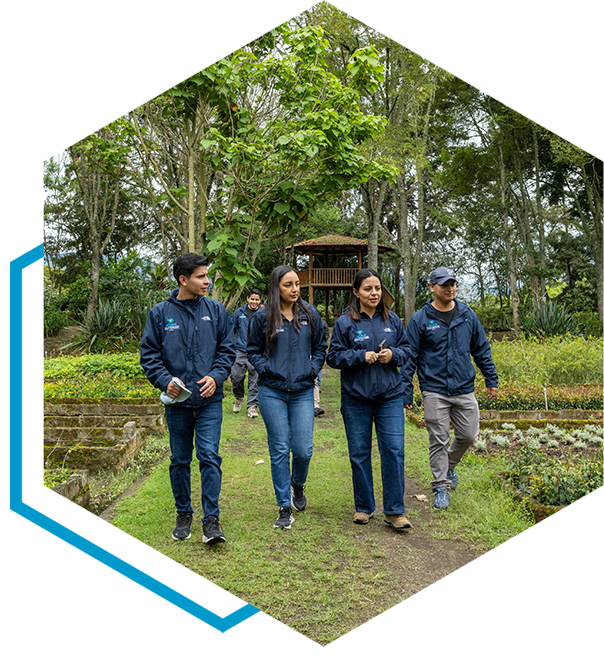
Sistema Verde Urbano (“Green Urban System”) addresses these challenges by organizing urban development around an integrated system of green infrastructure. Led by the Municipality of Loja, the project links parks, rivers, peri-urban hillsides, urban agriculture areas and mobility corridors into a single, citywide network that guides land use, climate adaptation, public space and transportation planning.
At the heart of Sistema Verde Urbano is a network of more than 600 hectares of connected green areas, structured around the Zamora and Malacatos rivers and the wider watershed they sustain. Through regional watershed management, Loja has protected peri-urban forest lands, improved river health and safeguarded the water sources that supply nearly all of the city’s drinking water—turning rivers once associated with pollution and flooding into foundations of a safer, healthier city.
Sistema Verde Urbano is supported by strong institutional coordination across planning, environment, mobility, public works and water agencies, with technical expertise from the Universidad Técnica Particular de Loja and long-term collaboration with GIZ. Community participation is embedded through neighborhood leadership structures, ensuring that residents help shape design, stewardship and use of green spaces.
Embedded across Loja’s planning and climate frameworks, Sistema Verde Urbano has transformed green infrastructure into a city-making tool that aligns health, mobility and watershed protection within a single vision. More than 200,000 residents now benefit from improved access to nature, safer mobility routes and healthier public spaces. As other Andean cities look to Loja’s experience, the system demonstrates how mid-sized cities can place nature at the center of urban development through coordinated planning, governance and implementation, while delivering tangible benefits for people and communities.
There is no prior existing relationship between the project and WRI.
By The Numbers
600+ hectares of connected green areas
200,000+ residents benefit from improved access to green spaces and infrastructure
60% vulnerable residents (children and adults) living in proximity to a public green space
180+ green spaces integrated into a single citywide system
32 kilometers of walking paths and active mobility corridors created or upgraded
98% drinking water sourced from protected, rehabilitated watersheds